
Family Constellations
Family Constellations were developed by Bert Hellinger, a German psychotherapist, who felt that many of the problems that cause our suffering were actually entanglements within our family system. He developed a therapeutic process where hidden family dynamics, often ages old, could be revealed, understood, and repaired.
To understand family constellation, let’s understand few key concepts first.
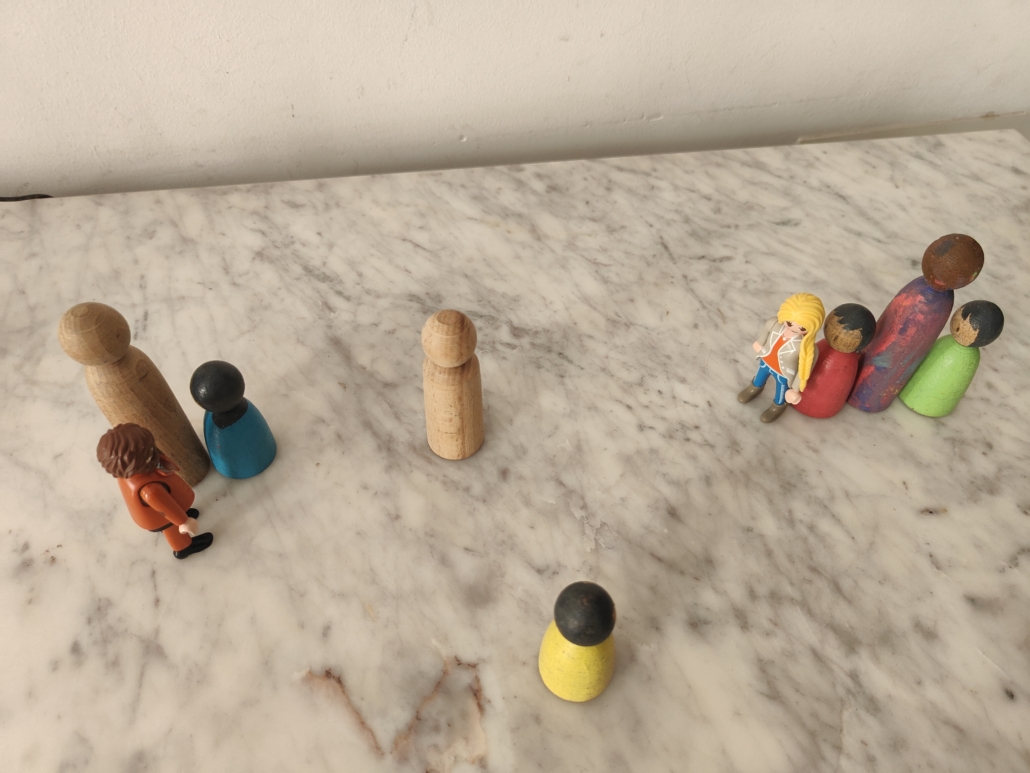
Morphogenic Field
The morphogenic field, which constellation work relies on, is a conceptual and symbolic energy field that contains a group’s memories and specific energies. That group can be a family, a community, a country, or the entire world population.
Because this energy field contains all the knowledge from the group, it may help us understand the sources of our issues, even if no one has told us the facts.
To understand the morphogenic field, watch this video.
Order of love
The basic rules around which the Family constellation therapy revolves are called the ‘Order of love’. Hellinger identified several orders of love from which love flows. The two fundamental orders of love were:
- Everyone in the group has the same right to belong and always belongs
- Everyone who belongs must be given their specific rightful place
This means if a family member is abandoned OR not accepted by the family OR not given their rightful place OR has taken someone else’s place in the family, there is a disturbance in the family system.
If an ancestor had felt that they don’t belong, they may act out, start conflict, or cause dysfunction to gain belonging. that is eventually faced by some members in later generations as trauma or failure in work or relationship etc.

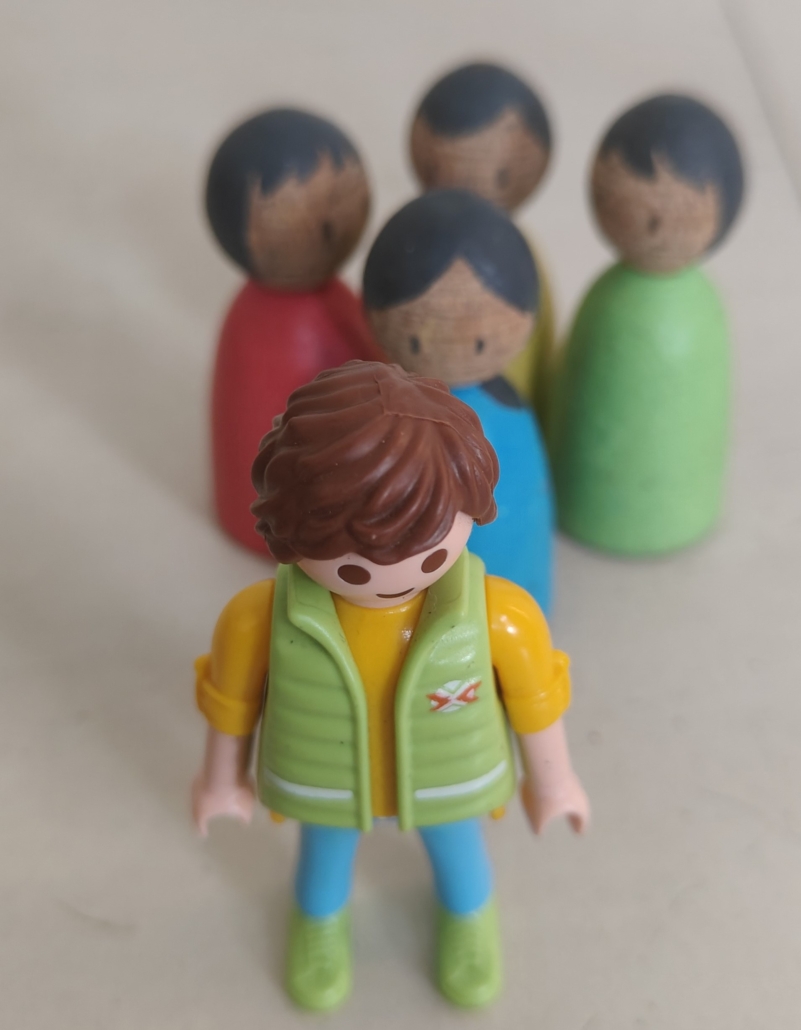
Excluded Family members
At times, families may exclude certain ones by choice or through circumstance. In family constellations, those excluded are thought to affect the entire family, even after the family no longer has contact with them. Some example or excluded family members are
- Babies who were lost
- Babies or children who were adopted
- Death in the family
- Ex-spouses and past partners from prior relationships
- Family who no longer have contact with the rest of the family for various reasons, including trauma
According to family constellation theory, these exclusions may cause issues in later generations. A new individual in the family system can take the excluded members’ place in the form of his or her emotional struggles, addictions, or even physical illnesses.
The main influencer behind these conflicts is the ‘drive to belong’. Everyone wants to feel belonged. When they don’t feel that they belong, they may act out, start conflict, or cause dysfunction to gain belonging.
Use of family constellation therapy
Family constellation therapy can address various physical, mental, social, and spiritual concerns. If you are struggling with any of such issues, this therapeutic method may help you overcome those concerns.
1
2
3
4
5
6
7
8
9
10
11

1
Challenging relationships with parents
2
Difficulty in love and relationships
3
Effects of traumatic events
4
Intense grief
5
Mysterious illness
6
Physical issues
7
Problems in work environments
8
Problems with anger and rage
9
Sadness not associated with actual life events
10
Struggle with making decisions
11
Unexplained anxiety and depression
What happens in family constellation workshop
In a Family Constellations workshop, the facilitator asks participants to volunteer to stand in or represent family members, ancestors, events, or even illnesses for the client.
The facilitator then arranges the participants in a way that might be meaningful for the seeker as part of their family constellations approach. Everyone may stay still during the role play, giving the seeker time to connect with the morphogenic field and determine if the arrangement feels true for them.
Standing in the Morphogenic field, the representatives can give us information about what has happened as they begin to take on the essential qualities, emotions, movements, and words of whom they are representing with little or no prior knowledge. In an individual session between client and facilitator, objects can be used as representatives.
The facilitator may then suggest a sentence for each of the participants in the group to say. The seeker takes their place in the family constellation, and each person says their sentence. If the suggestion doesn’t ring true for them, the facilitator can try again.
After the family constellation exercise, the seeker, having learned the potential source of their issue, may be prompted by their counselor to learn more about the person (or part of their past) related to the issue in question. If an individual is still alive, they might choose to connect with that person directly on an emotional level to bring healing to the relationship.
Suppose the individual is deceased or otherwise unavailable. In that case, the seeker may find other methods to learn about what occurred in the past or what that person may represent to resolve those lingering concerns.